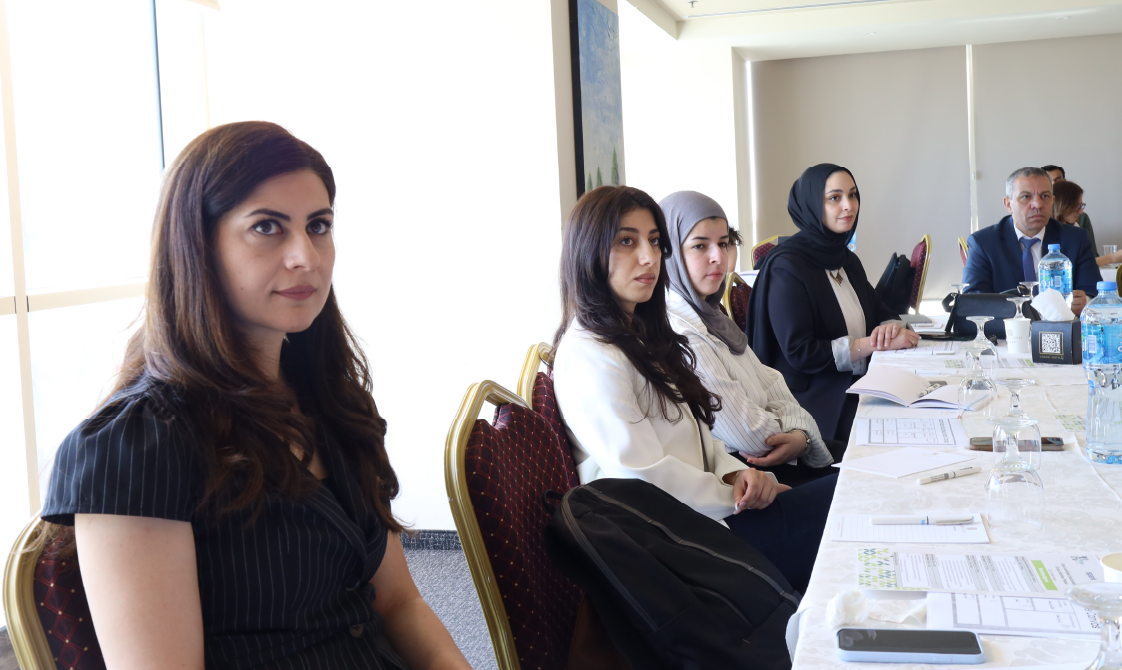
On Wednesday, May 21, 2025, the Green Forward programme officially kicked off its first workshop under the Green Launchpad track, titled “Sustainable and Circular Business Models.” This in-person session marked a pivotal milestone in the programme’s launch phase, engaging five selected Palestinian Business Support Organizations (BSOs) in an interactive, expert-led capacity-building experience.
This workshop set the tone for a learning journey rooted in local relevance, practical application, and cross-organizational exchange—key pillars of Green Forward’s vision to foster an inclusive and resilient green economy in Palestine.
The objective of this first workshop was to introduce BSOs to the core principles and real-world applications of sustainable and circular business models, with a specific focus on how they can be applied in the Palestinian MSME landscape.
This aligns directly with Green Forward’s Outcomes, which aim to strengthen the role of local BSOs as ecosystem enablers in the green transition. Through knowledge-building, tool familiarization, and peer learning, the workshop was designed to support BSOs in delivering more impactful services to MSMEs and early-stage entrepreneurs.
The session was structured to:
- Build understanding of Triple Bottom Line, SDGs, and circular economy principles
- Introduce practical tools like the Green Business Model Canvas and UNIDO Circular Economy Toolkit
- Explore local and regional case studies to ground theory in lived business realities
- Prepare for the launch of Peer Pods to support continued learning beyond the workshop
The workshop was attended by five BSOs selected through a competitive national process for the Green Launchpad track:
1- Hebron Chamber of Commerce and Industry
2- Businesswomen Forum (BWF)
3- Build Palestine
4- Rural Women Development Society (RWDS)
5- Innovation Hub at An-Najah National University (InnoPark)
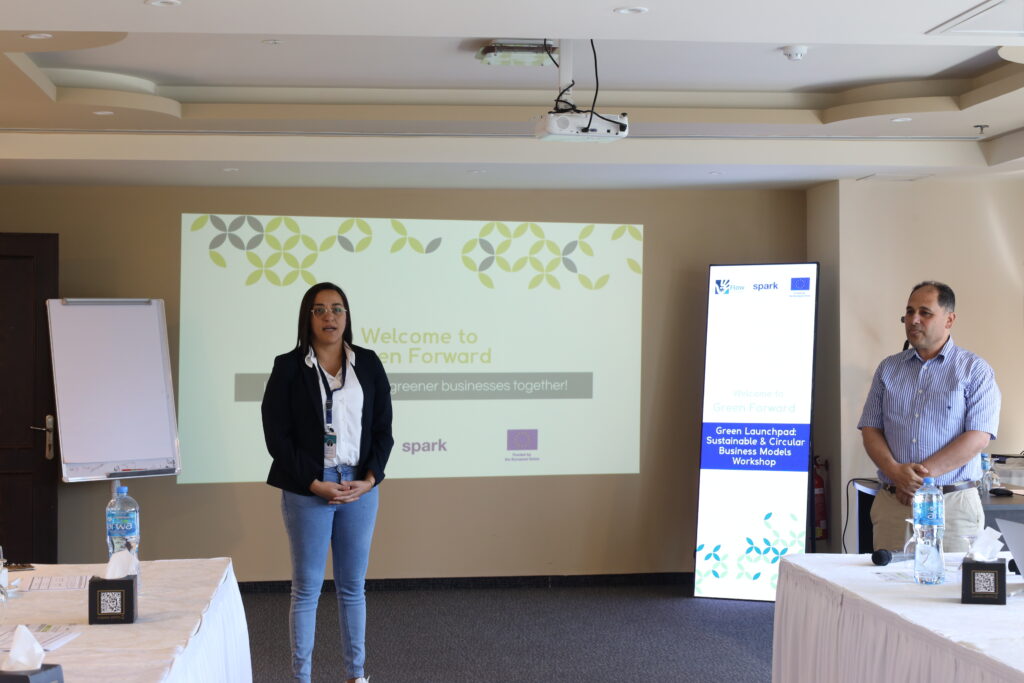
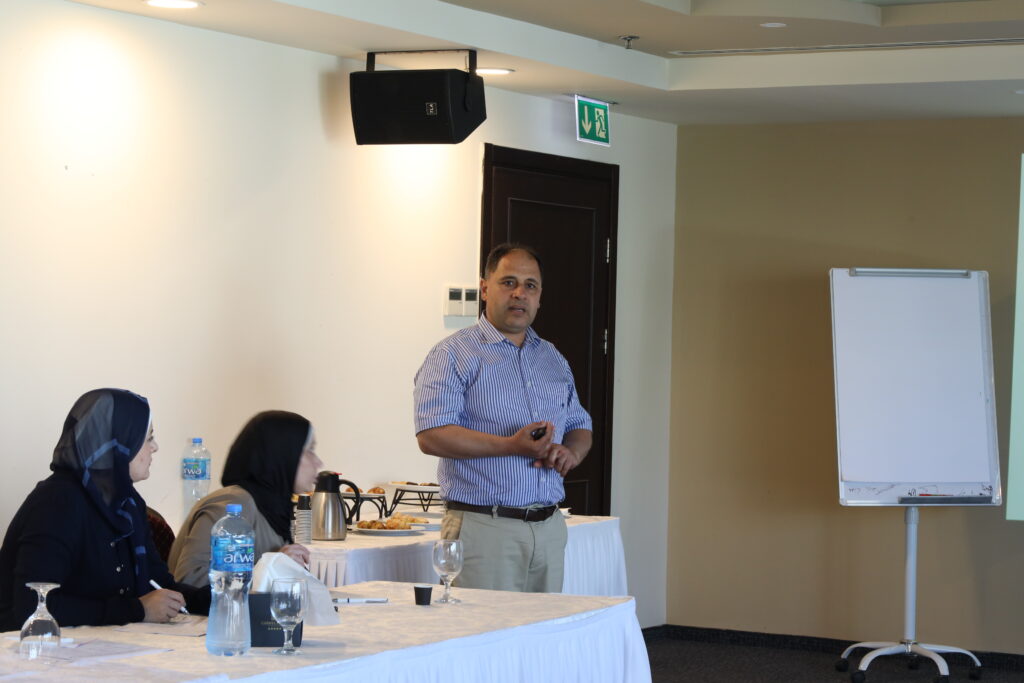
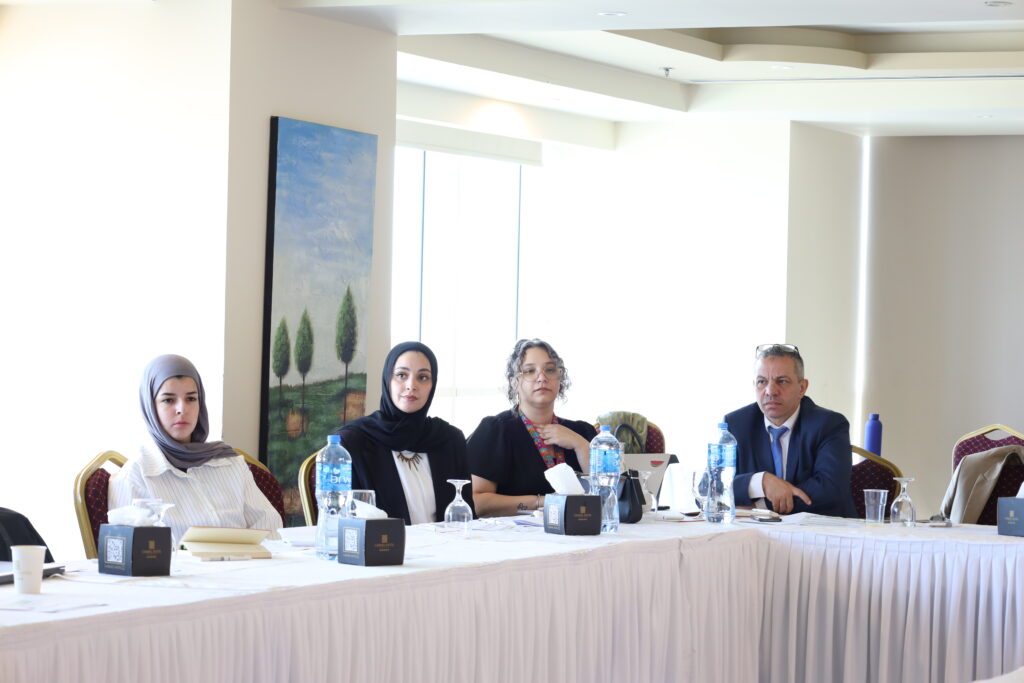
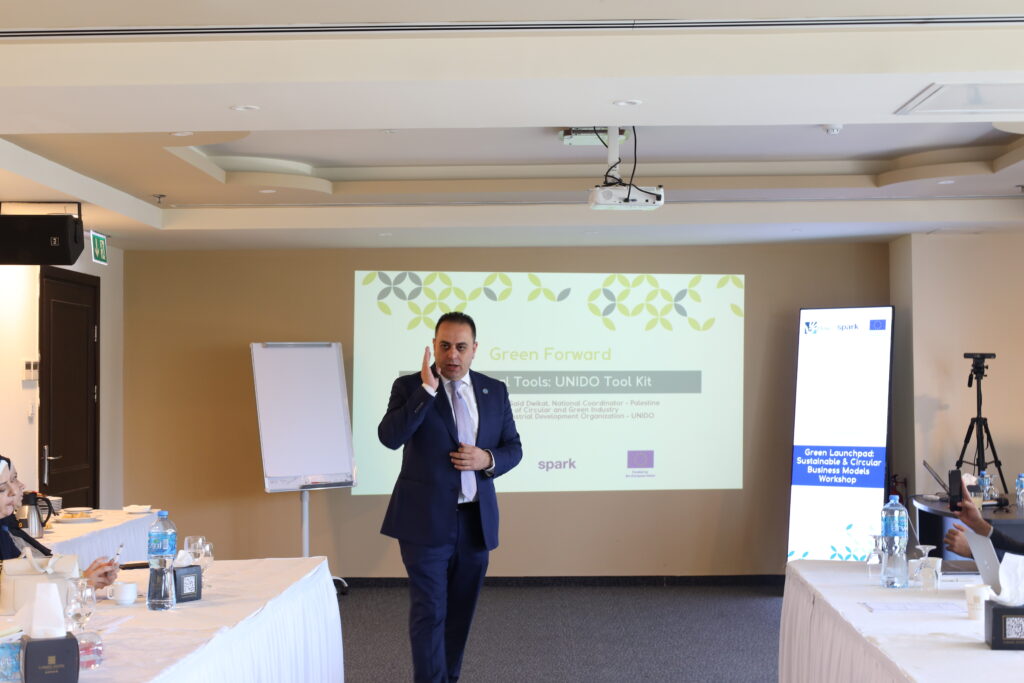
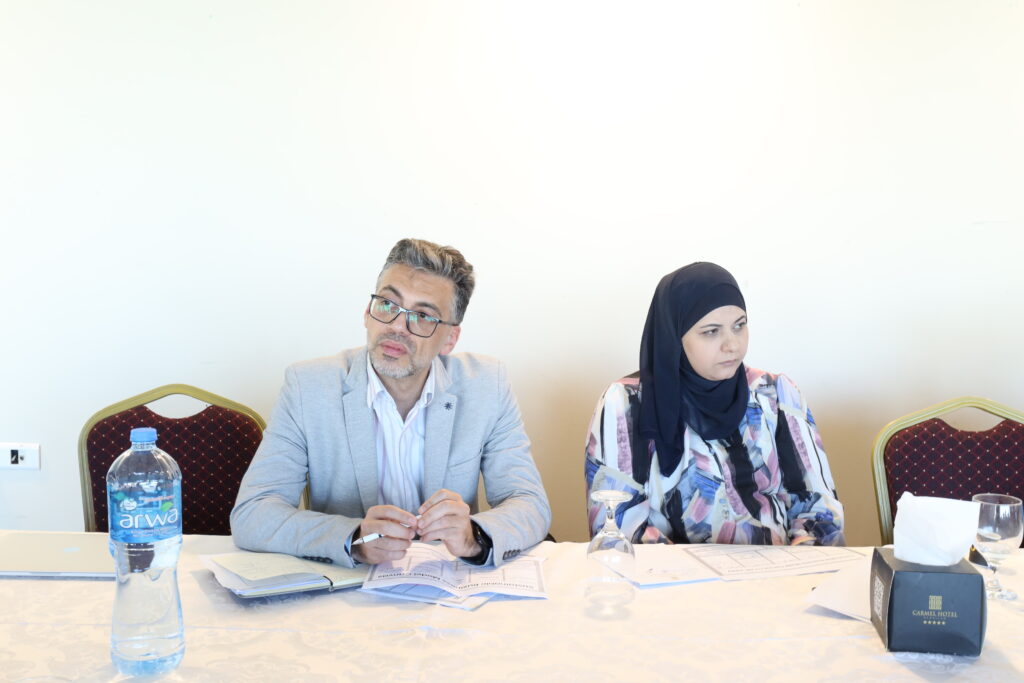
These organizations represent diverse sectors and regions, including private sector chambers, community-focused NGOs, and university-based innovation hubs. They are united by a shared goal: to strengthen their role in enabling the green transition and offering tailored support to Palestinian MSMEs.
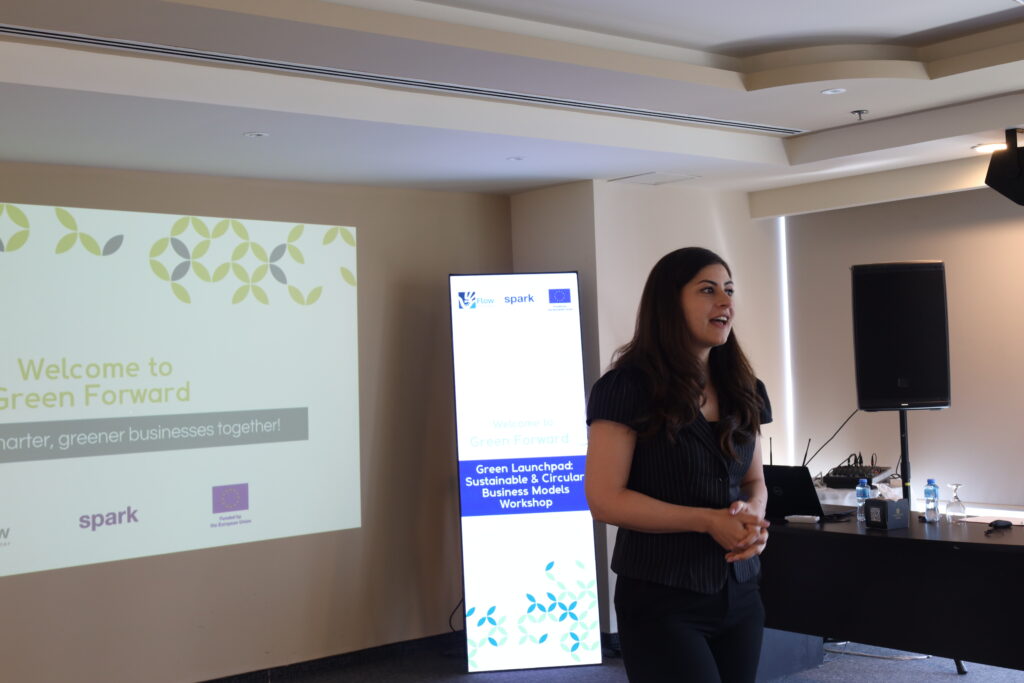
The session was designed as a full-day learning experience, structured to bridge global sustainability frameworks with Palestinian realities. The content was delivered through interactive lectures, tool demonstrations, and case-based group exercises, led by two high-level experts.
Facilitator Dr. Khaled Hardan, a senior agricultural and environmental expert with over 25 years of experience in sustainable development, climate adaptation, and agribusiness and Dean of Faculty of Agriculture at Al Quds Open University opened the session by laying the groundwork for understanding sustainability in the Palestinian context. He introduced the Triple Bottom Line framework (People, Planet, Profit), offered a high-level walkthrough of relevant Sustainable Development Goals, and explained how circular economy practices can help decouple economic growth from resource depletion.
- Dr. Hardan also explained the two foundational cycles of the circular economy:
The Biological Cycle: focusing on compostable and regenerative materials (e.g., food, agriculture)
- The Technical Cycle: targeting durable, recyclable, or restorable materials (e.g., plastics, electronics, machinery)
He grounded these frameworks in real-world Palestinian examples, such as the circular use of olive by-products, composting in farming communities, and small-scale recycling initiatives.
To move from theory to application, participants were introduced to two widely adopted tools:
- Green Business Model Canvas (GBMC): This adapted version of the standard BMC incorporates environmental and social value propositions. BSOs practiced mapping out mock MSME business models using the canvas—identifying opportunities to integrate sustainability across value creation, delivery, and capture.
- UNIDO Circular Economy Toolkit: Guest speaker Dr. Said Dwikat, a seasoned professional with over 20 years of experience in strategic planning, business innovation, and industrial SME development in addition as being UNIDO National Coordinator at Palestine, led this segment, introducing the toolkit’s diagnostic approach to identifying inefficiencies, resource waste, and green innovation opportunities. Dr. Dwikat explained key modules such as lifecycle flow mapping, redesign levers, and system optimization, emphasizing how BSOs can adapt this toolkit to support Palestinian SMEs in sectors like food processing, water use, and industrial design.
Dr. Dwikat then shifted focus to broader market and policy drivers. He provided an overview of:
- ESG standards and their emerging role in business access to global market
- Growth in green finance and donor-backed sustainability investments
- Regulatory frameworks shaping Palestine’s environmental and industrial landscape
He shared experiences from his work with UNIDO, PADICO, PIAFZA, and other national institutions, illustrating how ecosystem actors can work together to accelerate green transition while responding to global market trends.
By the end of the session, participants had:
- Gained stronger conceptual grounding in sustainable and circular business practices
- Practiced applying the Green Business Model Canvas and UNIDO tools to MSME use cases
- Learned from local and regional case studies that model realistic, scalable green interventions
The session also helped frame the coming months of programme activities, including upcoming workshops and roundtables focused on ESG standards, regulatory barriers, green finance, and ecosystem innovation.
Also, this session introduced the concept of peer-driven reflection and mutual accountability. Participants began informal planning around how their organizations could share learnings, co-develop tools, and continue engaging beyond the workshops.
The Green Forward team will be facilitating this process with dedicated touchpoints, shared tools, and virtual collaboration formats—ensuring that the momentum generated during the workshop translates into long-term collaboration and embedded practice.
As the Green Launchpad track continues, BSOs will build on this foundation—shaping policies, mentoring startups, and embedding sustainability into the core of their institutional strategies.
The Green Forward programme is funded by the European Union and implemented by SPARK and Flow Accelerator in Palestine to foster a green and circular economy (GCE) in the Southern Neighbourhood region.