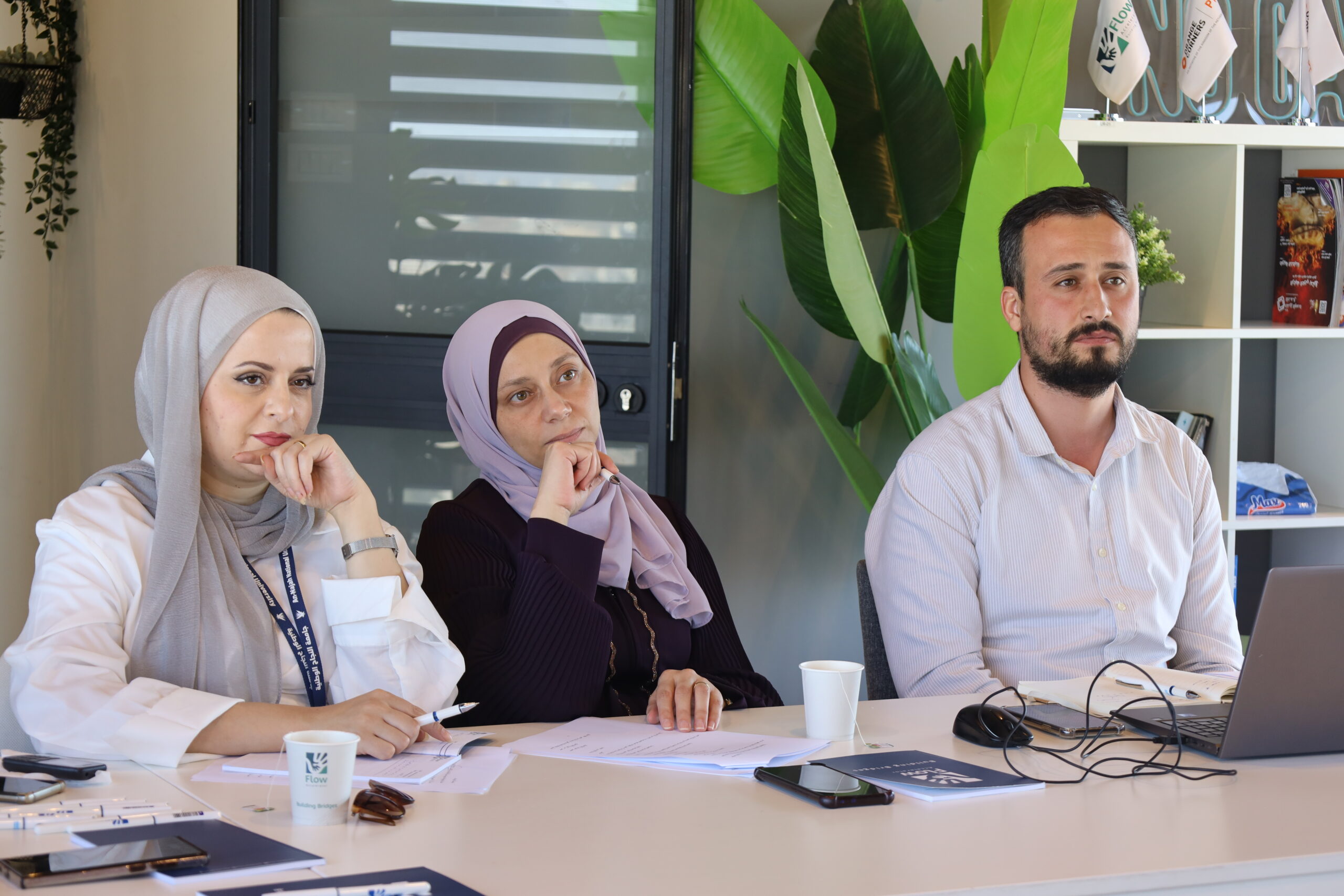
As part of the Green Launchpad track under the Green Forward Program, Flow Accelerator convened a high-level roundtable titled “Overcoming Regulatory Barriers to Green Business”. The session brought together Business Support Organizations (BSOs) participating in the Launchpad—including the Businesswomen Forum, InnoPark, Hebron Chamber of Commerce, the Rural Women’s Development Society and Build Palestine—alongside policymakers, private sector leaders, and international partners.
The roundtable was facilitated by Dr. Saed Dorra, Socio-Economic Consultant and CEO of ACAD, whose extensive expertise in development and policy guided participants through an in-depth exploration of the regulatory landscape affecting green entrepreneurship in Palestine.
A distinguished panel of guest experts enriched the dialogue:
- Mr. Abdelsalam Shbeta, Ministry of National Economy – Green Economy Unit
- Eng. Tareq Iraqi, Environment Quality Authority – Policy and Planning Department
- Mr. Mustafa Ismael Tamaizeh, OXFAM International – Economic Justice Program
- Eng. Abdallah Salahat, Massader Palestine – Engineering and Technical Support
The discussion unfolded in four key phases. It began by setting the scene with an overview of the current legal and administrative frameworks that shape the operating environment for green MSMEs, highlighting licensing, permits, compliance, taxation, and sector-specific bottlenecks. This was followed by a stakeholder dialogue where BSOs, SMEs, and participants shared first-hand experiences, mapping systemic gaps and frictions in real time. The collaborative atmosphere encouraged candid exchanges and generated a live thematic map of pressing barriers across finance, energy, licensing, and compliance.
Building on these insights, participants engaged in group work and action planning, working in thematic clusters to translate identified bottlenecks into practical recommendations. Focus groups on licensing and certification, waste and circularity, energy compliance, and finance developed targeted proposals for streamlining procedures, lowering costs, and enabling greater access to support.
The session culminated in a plenary synthesis and prioritization exercise, where participants presented their recommendations, debated priorities, and collectively identified 3–5 urgent advocacy points to take forward. These will feed directly into upcoming BSO-led policy papers, future consultations with government entities, and the next Peer Pod on advocacy planning.
The outcomes of the roundtable reflected the collective will to act. Key issues raised included the lack of awareness and access to green economy incentives, high costs and lengthy procedures for registration and certification, fragmented coordination among institutions, and limited community knowledge about green practices. At the same time, participants highlighted opportunities to leverage the national sustainability task force, draft environmental law, updated company regulations, and new e-registration systems as entry points for change.
Proposed interventions ranged from establishing one-stop service centers and expanding digital registration, to enhancing BSO capacities, documenting best practices, and creating stronger linkages between support institutions and government frameworks. Emphasis was placed on the need for strategic coordination, broader dissemination of information, and building the institutional and technical capacities of BSOs to champion advocacy and support green entrepreneurs effectively.
This roundtable reaffirmed the Green Forward’s mission to empower BSOs as ecosystem enablers—not only in training and support, but also in policy dialogue and systemic change. By bringing policymakers, private sector representatives, and development actors to the same table, the session created a collaborative platform for advancing the enabling environment of Palestine’s green and circular economy.
The Green Forward programme is funded by the European Union and is implemented at the meso level by SPARK and Flow Accelerator in Palestine to foster a green and circular economy (GCE) in the Southern Neighbourhood region.